No. 02 – Spring 2026
Message from the FIQ president

Overloaded each in their own corner
Over time, work overloads have become commonplace in the health network. No one is surprised anymore when emergency rooms are overwhelmed, when teams are running with two less staff members, or when a third contingency plan is imposed. But at no time should a work overload be normalized. It should not be part of the game.
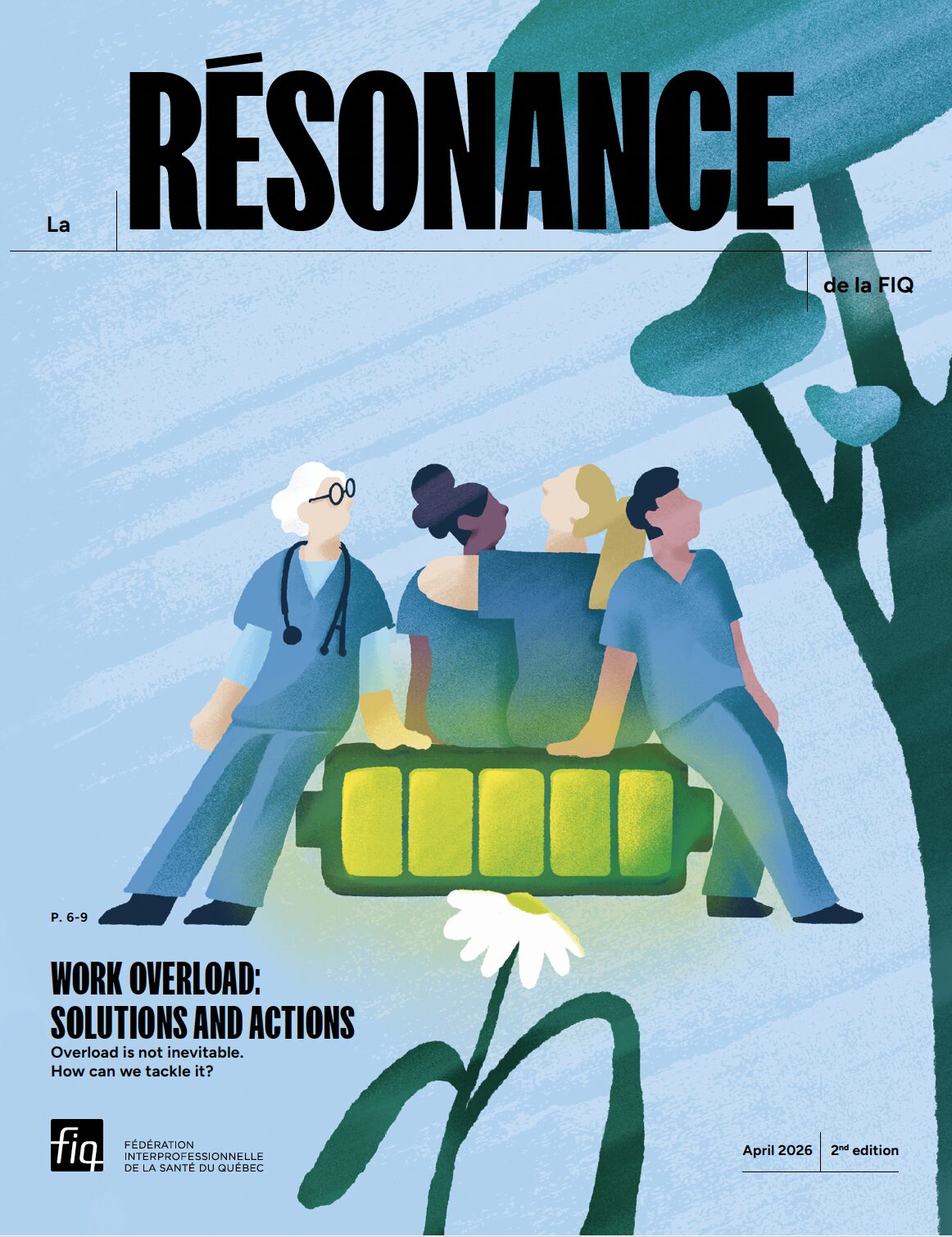
As you will have gathered, for this second edition of La Résonance, we have decided to talk about work overload. Don’t worry, the aim is not to explain why you are overloaded, but rather to offer solutions to finally break free from this cycle.
A work overload can be discouraging, but past struggles have shown us that collective strength can advance our demands to improve our working conditions, even when it seems impossible. What I propose is that we work together to stop being overloaded in our own little worlds. Shall we get started?
Julie Bouchard, présidente de la FIQ

Dear colleagues,
You can be sure that the magazine team has been busy since last fall. Its goal: to demonstrate that, despite what managers say, work overloads are not inevitable.
What is being done in institutions to counter overloads? What strategies can be implemented? How has organization of work evolved over time? Are there any viable solutions? These are some of the questions that will be addressed in the following pages.
From one healthcare setting to another, we face different realities, but we face similar challenges in terms of work overloads. Let’s stick together, we can make a difference!
Enjoy the read!
2025-2029 Communication Committee / Jean-Sébastien Blais – Syndicat interprofessionnel en soins de santé de l’Abitibi-Témiscamingue / Kathy Lagacé – Syndicat des professionnelles en soins infirmiers et cardiorespiratoires du Bas-Saint-Laurent / Aurélie McBrearty – Syndicat des Professionnelles et Professionnels en soins de santé du CHUM / Amélie Mercier – Syndicat interprofessionnel du CHU de Québec / Bianca Morin Tremblay – Syndicat des professionnelles en soins du Saguenay–Lac-Saint-Jean
No. 02 – Spring 2026
Articles

Invest in the frontline to reduce the overload
A strong frontline is essential for reducing the overload in the health network, as well as reducing the mortality rate and relieving the pressure on emergency services.

The hidden burden of an overload
In addition to the ever-increasing workload and number of patients, a multitude of invisible factors overload or cause distress among healthcare professionals.

Fighting overload, or how to tackle a huge challenge
Do you know how to tackle a huge challenge? One step at a time. Taking action against an overload is a big undertaking that can easily be discouraging. But mobilizing work teams and union action remain the best ways to fight cynicism and denounce the dangerous effects of an overload on care, one department at a time.
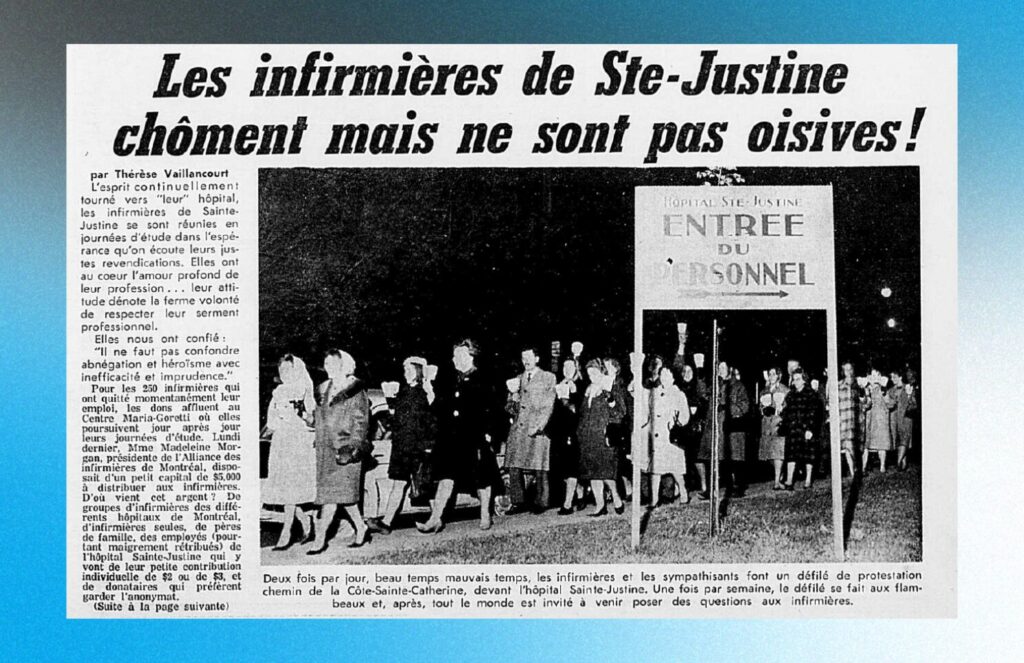
The health network has greatly evolved over time. What has changed in our working conditions? What challenges have we faced? Nothing beats a timeline for providing an overview of the situation.

Impossible, crazy or optional struggles
The working and living conditions we enjoy today have not always been what they are now. Some benefits that we take for granted were not given to us out of the goodness of the hearts of governments or employers: they were won through mobilization and constant pressure. Here are three impossible, crazy or optional struggles that were won thanks to the tenacity and courage of labour organizations and their members.

Why are we staying in the public network?
Why do we stay in the public network? That is the question we have all asked at one time or another. Virginie Beffort, Nurse Clinician since 2015 in various settings, notably at the Poison Control Centre and Emergency Room at the Hôtel-Dieu de Lévis, found the right words to answer this question.

Denouncing the overload: mobilization pays off
The “CHU à boutte!” campaign was launched in spring 2025 by the healthcare professionals in maternity at the Hôpital Fleurimont. Exhausted from the abusive MOT imposed by their employer and after months of fruitless efforts, they started wearing a sticker on their uniform and put up some posters to denounce their situation. The administration of the CIUSSS de l’Estrie – CHUS objected to their visibility campaign, first by attempting to regulate it, then by banning all forms of signage and threatening the team with disciplinary action.

Urgent and exceptional situations? No. MOT as a management method? Yes.